
Branding’s New Frontier: Balancing Human Creativity with
the Power of AI

- July 9, 2026
- 3 min read
Artificial Intelligence is rapidly reshaping the future of branding, design, content, and digital marketing. For every modern branding agency, AI is no longer a distant technology trend. It is becoming part of the creative workflow, helping teams think faster, explore wider, and deliver sharper brand communication.
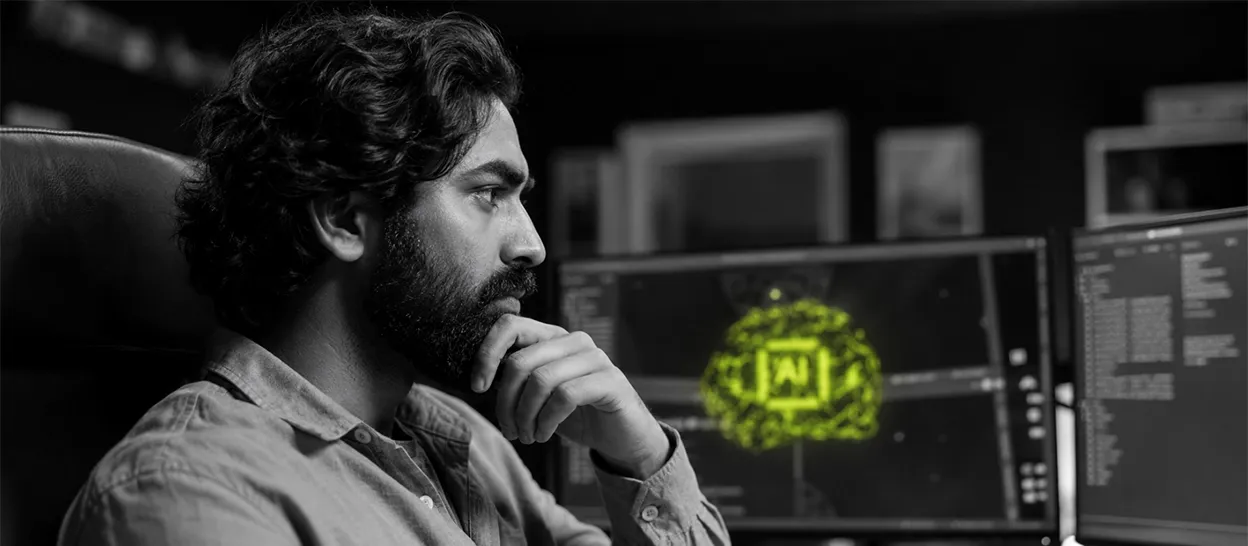
At Studio Mindful, we see AI in branding not as a threat to human creativity, but as an intelligent enabler. Used with the right intent, AI can support brand strategy, content creation, visual exploration, audience research, and marketing communication. It can reduce repetitive effort and allow creative professionals to spend more time on what truly matters: insight, imagination, originality, and strategic thinking.
The enabling power of AI lies in its ability to assist the creative process. It can help generate early ideas, structure brand messaging, compare different tones of voice, develop content directions, study audience behaviour, and adapt communication for different digital platforms. For businesses investing in branding and digital marketing, this can make the process faster, more informed, and more consistent.
But branding has never been only about speed or output.
A strong brand identity is built on human understanding. It requires empathy, cultural context, business clarity, intuition, and the ability to interpret ambition. Whether it is a logo, website, campaign, brochure, video, or social media strategy, the strongest brand communication comes from understanding what a business stands for and why its audience should care.
This is where human creativity remains irreplaceable. And so while our teams have access to many AI tools, we still nurture habits of note-taking, sketching, writing down content-hierarchy, building wireframes using pen and paper, so on and so forth.
The caution with AI begins when it is used without a seed of thought. If the creative process starts and ends with a prompt, without strategy, imagination, or judgment, the result may look polished but remain shallow. It may sound fluent, but not original. It may appear modern, but not meaningful. Blind dependence on AI tools can make brands sound similar, look familiar, and lose the differentiation they are trying to build.
AI can produce options. But it cannot define the soul of a brand.
That responsibility still belongs to the strategist, designer, writer, and entrepreneur. The human mind must frame the problem, define the intent, edit the output, and add the layer of imagination that makes branding memorable. AI can support the journey, but human insight must remain the starting point.
The future of branding will not belong to those who reject AI, nor to those who surrender completely to it. It will belong to those who can balance artificial intelligence with creative intelligence.
For businesses and creative agencies, the opportunity is clear. Use AI to move faster, think wider, and explore deeper. But let strategy, originality, and human imagination lead the way.
Because brands are not built by tools. They are built by people who know what those tools are meant to serve.
Share this post


Studio Mindful
Actionable insights on branding, creativity, design, digital marketing and the evolving business landscape - shaped by our work with ambitious businesses, entrepreneurs and institutions across industries. Curated by our founder, Mihir Gajrawala.